
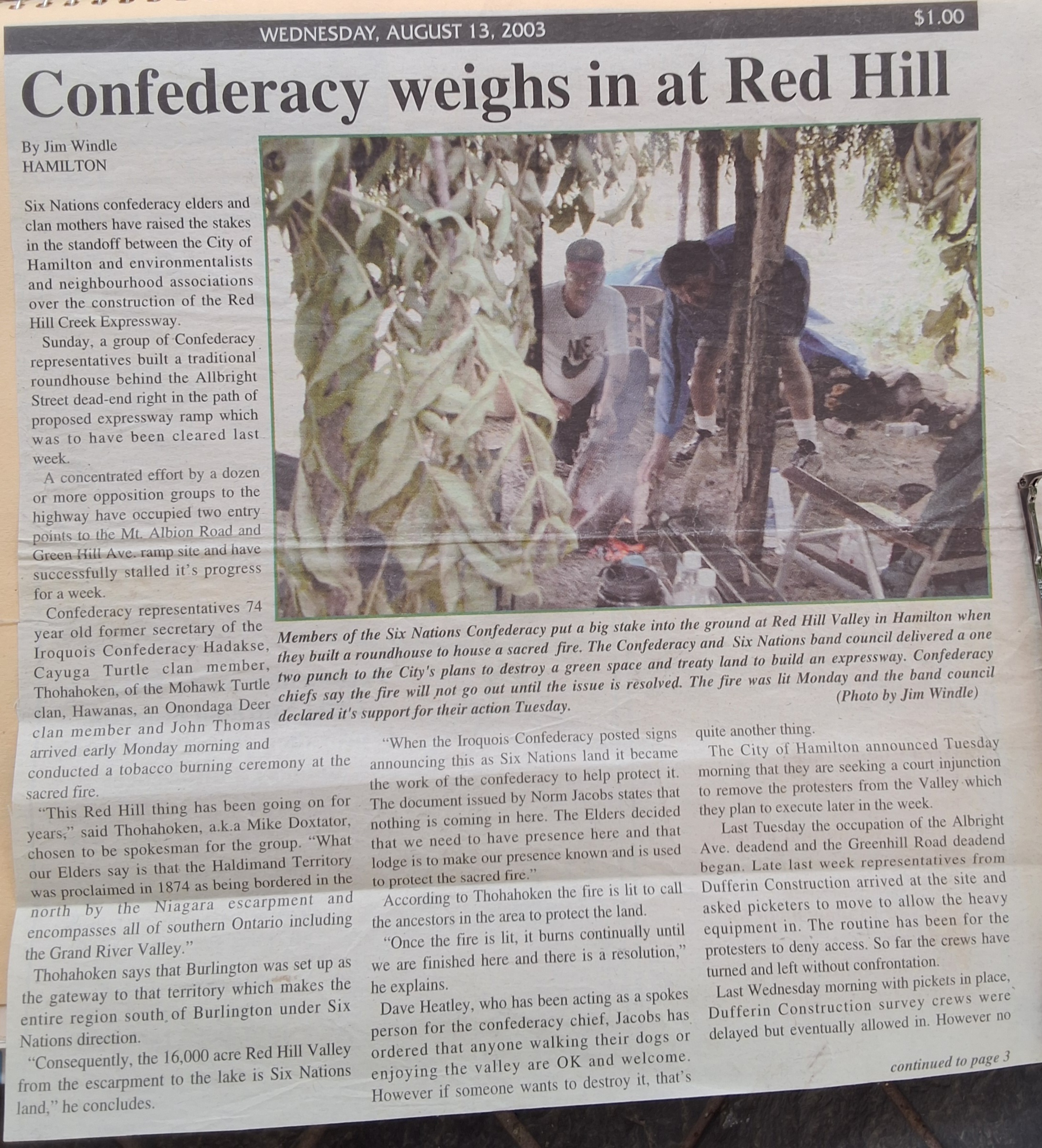

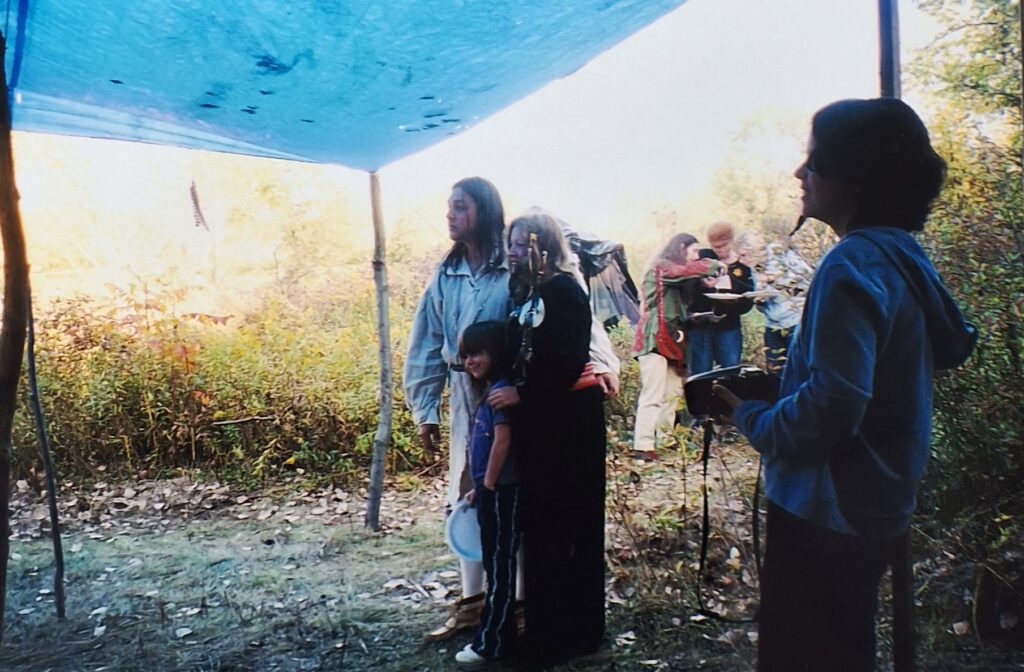
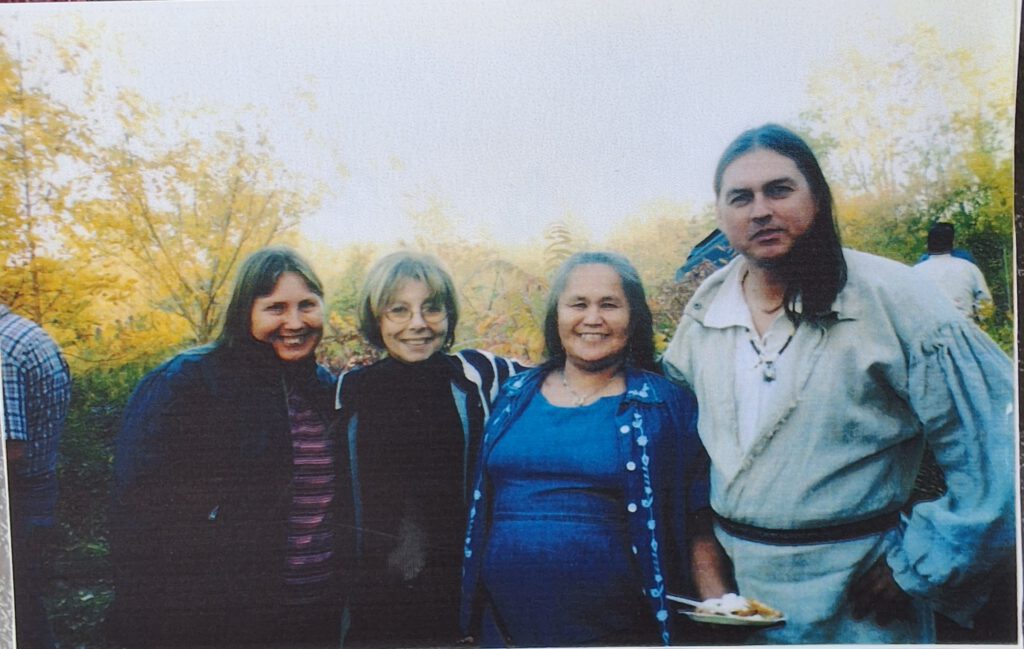
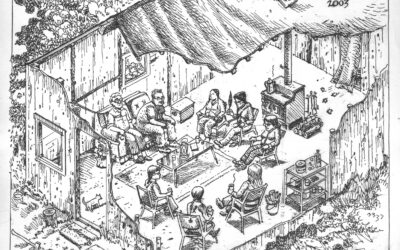
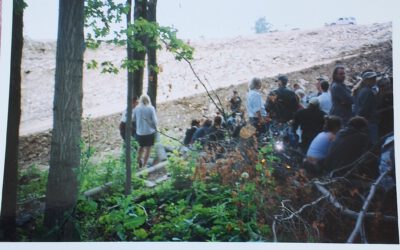
These are the only photographs I have of the Roundhouse and the sacred fire it held.
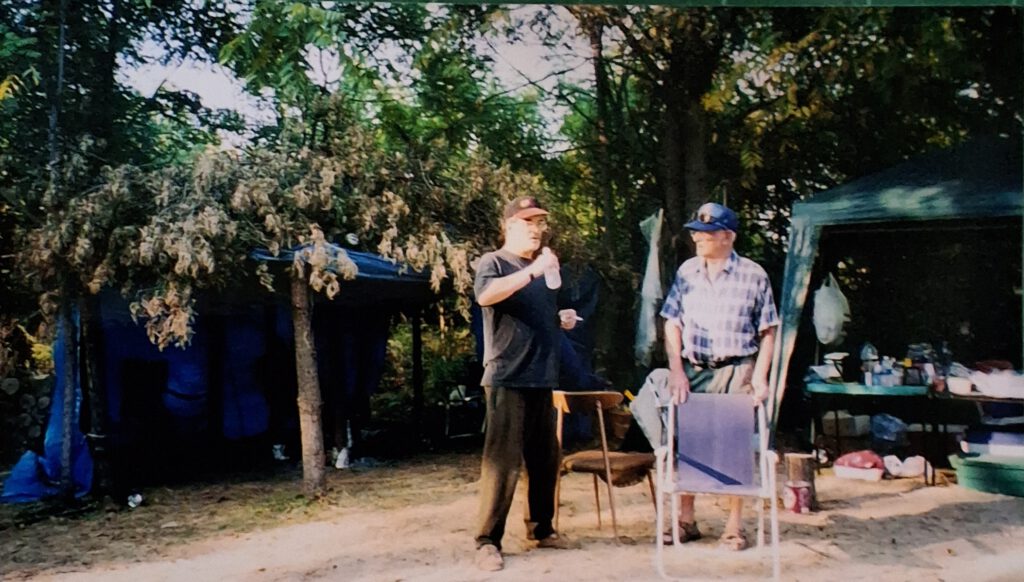
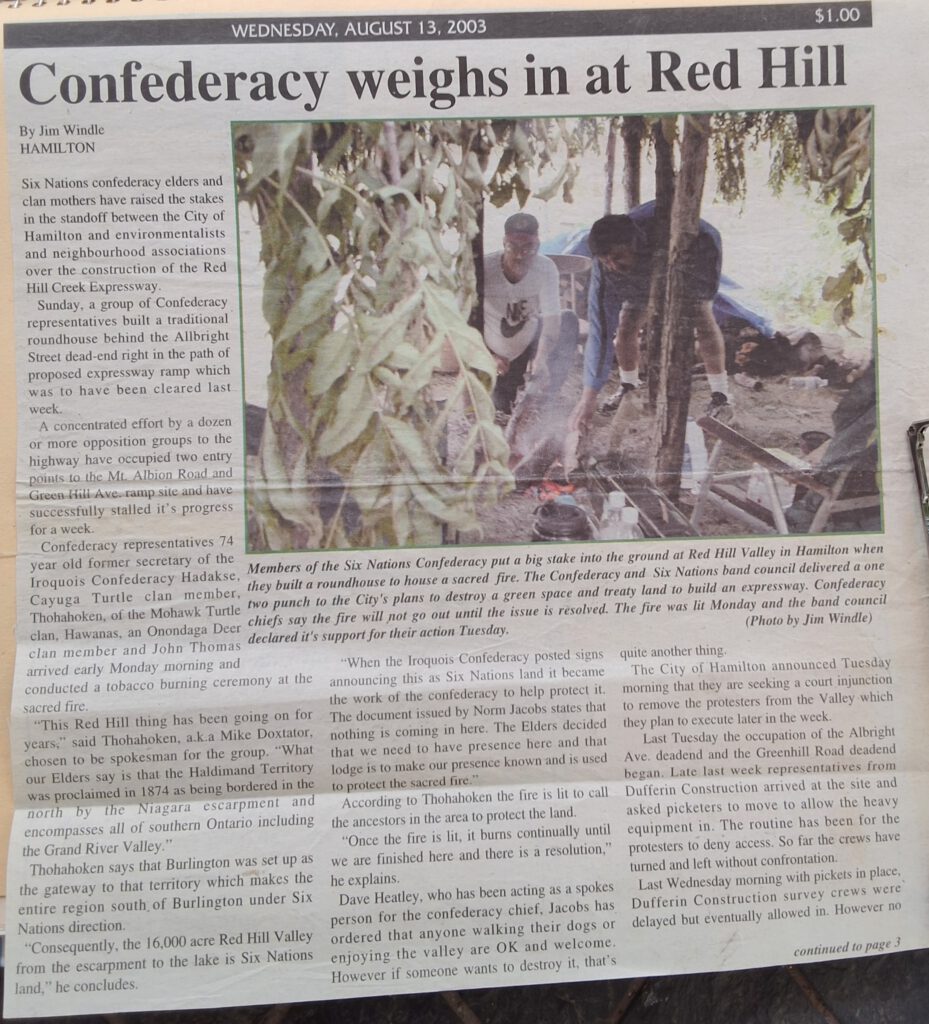
For me, the space was deeply sacred, and I felt it would be inappropriate to take my camera out inside the Roundhouse.
CHCH News was present almost daily, but noone agreed to give interviews. I understood why—many felt the media had long ignored or misrepresented First Nations people, treating them unfairly.
During that time, I met several RCMP officers as well as Hamilton’s top police officials. In hindsight, I wish I had taken photographs of everyone I encountered, but my own bias toward police and authority figures made it difficult to believe in the sincerity of their words.
Each day, a diverse stream of people moved through the Valley. One of my favourite moments was visiting with an Elder who came every day. Often, upon arriving from work, I would tidy the food area, which was frequently left in disarray. One day, as I entered the Valley, the Elder stopped me, asking me to sit down because he had something to say. He then turned to a woman nearby and instructed her to clean the food area instead, pointing out that she was there all day while I came directly from work to contribute. She was not pleased, but his words made me feel seen and appreciated.
Being there daily also meant helping to maintain a sense of respect for the land. One of the rules was that people were not allowed to drop cigarette butts or garbage anywhere in the Valley—a small but important way of honouring the space we were protecting.
We all lived by the rules that had been set for us. With each passing day, more people arrived—along with increased media presence and a steady flow of police.
In the Valley, we often saw Hamilton’s top police officials, as well as a city-appointed mediator who came to speak with us. It was clear that the police were constantly assessing the situation, watching for the moment when they could remove us so the city could proceed with its plans to build the road.
Meanwhile, meetings were taking place everywhere. Tensions were rising as impatience grew, with many individuals eager to position themselves as the one who would “save” the Valley.From the outside, it may not have appeared that we, as Indigenous women, were doing much. But beneath the surface, tensions were growing and some people were becoming anxious. My friend, the Clan Mother, worked tirelessly to persuade members of her reserve to come and help protect the Valley. By this time, the Chief had returned to the hospital, and he asked if I could remain with the Clan Mother to provide her with the extra support she would need.
All around us, there were many quiet, behind-the-scenes meetings—discussions and decisions that would shape the course of what happened next in the Valley.
One evening, there were about 10 to 12 people gathered in the Roundhouse. I felt it was necessary to address the growing undercurrent of division and asked everyone to stop holding private meetings and instead come together as one. Most insisted they were not meeting in secret, while a few quietly left the Roundhouse. I could sense the mix of emotions in the room—skepticism, tension, and uncertainty. It is difficult to know what to say to those who choose not to believe in you.
In the days that followed, more people began coming to the Valley after work and staying into the evening. This not only strengthened our presence but also meant I was able to get a ride home every night, which was far better than taking the bus. One man in particular made sure I had transportation to every meeting. If he was on day shift, he would pick me up directly from work so that we could be at the Valley together.
He introduced me to his beautiful wife and family, and it was a genuine pleasure meeting them all. Over time, we became like family ourselves—bonded, somewhat unexpectedly, over a dog I could not keep.
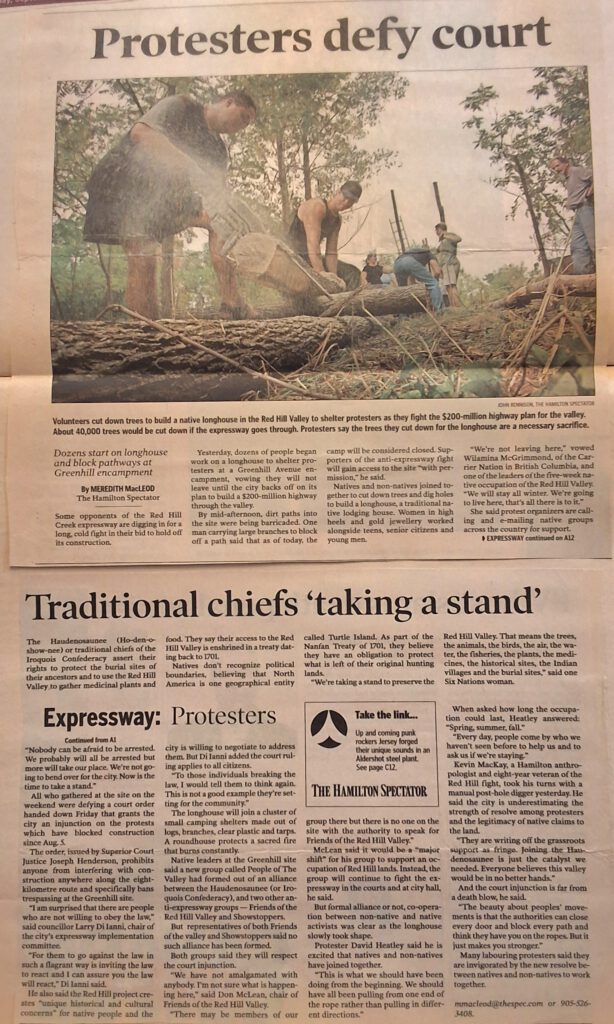
One September day, we decided it was time to build a Longhouse. I approached my friend, the Clan Mother, to ask if it would be acceptable, and she was delighted by the idea. Soon, people from Six Nations arrived to help reclaim their land.
That day, people from many Nations came together in a powerful show of unity. The only ones absent were those who stood to lose everything if they set foot in the Valley—the City had threatened some individuals with serious consequences, and for them, the risk was too great. Still, their families came in their place to lend their hands and their hearts to the effort.
I had never seen so much activity in one place—people moving quickly, cutting down trees, and clearing land with purpose. Others arrived carrying all kinds of food to share. Even people coming straight from church in their Sunday best joined in, clearing their own spots, and helping to fell trees for the Longhouse.
It was an incredibly long day. While everyone else was hard at work, I found myself greeting each new arrival to the Valley. Some visitors gave off an uneasy feeling, and I began to realize the need to be more careful about who was coming in. Soon, I started hearing whispers about undercover officers visiting during the day. We were warned that our enemy could be standing right beside us without us knowing it.
Tensions rose when men from another Nation insisted that we put out our sacred fire so the American Indian Movement (AIM) could take over the land claim with their own sacred fire. It was a stark reminder that even among those fighting for the Valley, there were competing visions
Another man soon began trying to take control, claiming to be a descendant of Joseph Brant. At the same time, frustration was growing among some of the men in the camp, who felt that the Confederacy was not taking enough action. In response, the Clan Mother took it upon herself to tend the sacred fire—aware that tradition required a fire keeper to be always present, day and night.
The women worked to keep the fire burning until men from the rez could come to take on the role. The message from the Clan Mothers was clear and unwavering: the sacred fire would remain, and no one was to attempt to extinguish it so that another group could replace it with their own.
During this time, I began to learn who could be trusted and who could not. Donations of money were being made to support the cause, and one day the Clan Mother asked me for the funds that had been contributed. I explained to her that I had never handled any of the money, specifically to avoid any question of impropriety, and that I had directed all donors to give it to a specific person who was always present. When she suggested that I might have taken it, I had to clarify my position and the steps I had taken to keep myself removed from handling funds. In the end, people confirmed to her directly who they had given their donations to—and it was not me.
Once the Longhouse was completed, some people moved in almost immediately. Drummers from St. Catharines arrived, filling the air with music and lifting the spirits of those gathered. The media was there as well, capturing photographs of the moment for the newspaper.
CHCH News was no longer permitted on site. I am not entirely sure what had happened, as I was only able to be there after 3 p.m. each day.
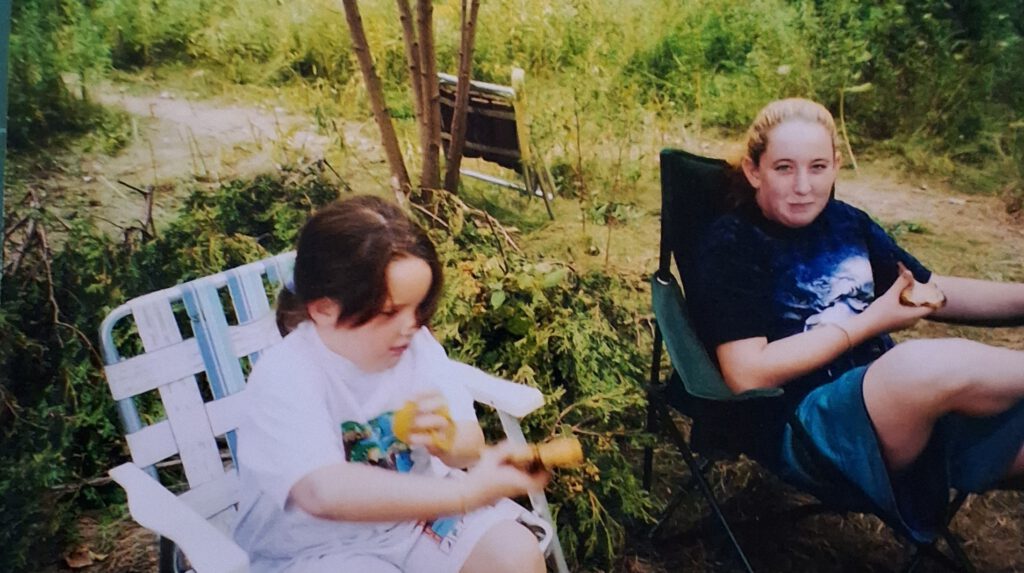

Those who had been identified as protesters were now under watch. I realized then that I needed to take steps to protect myself. My emails were being monitored by the police, as was my phone. I did not give it much thought—Native women are so often targeted in one way or another—and I knew I had nothing to hide. I trusted that the Creator was watching over me and keeping me safe from harm.
I was grateful to have a ride home each day from someone who was looking out for me. He seemed to know more about the situation than I did, having formed friendships with many of the other men in the Valley. He was also attending the private meetings that were taking place at the time, giving him insight into the undercurrents that I was only beginning to understand.
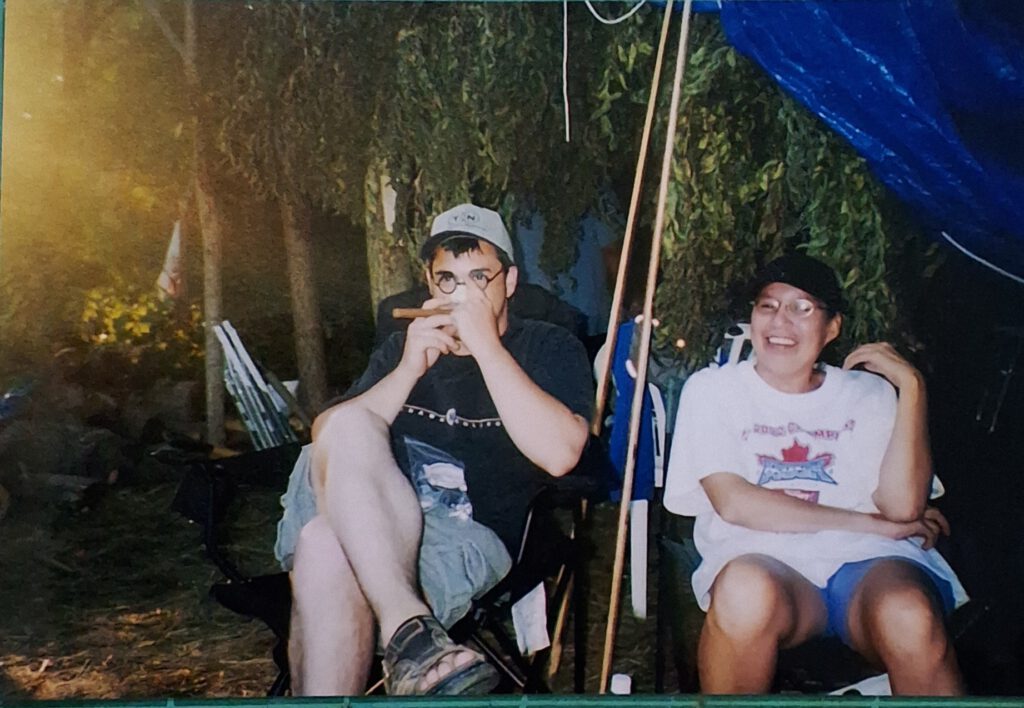
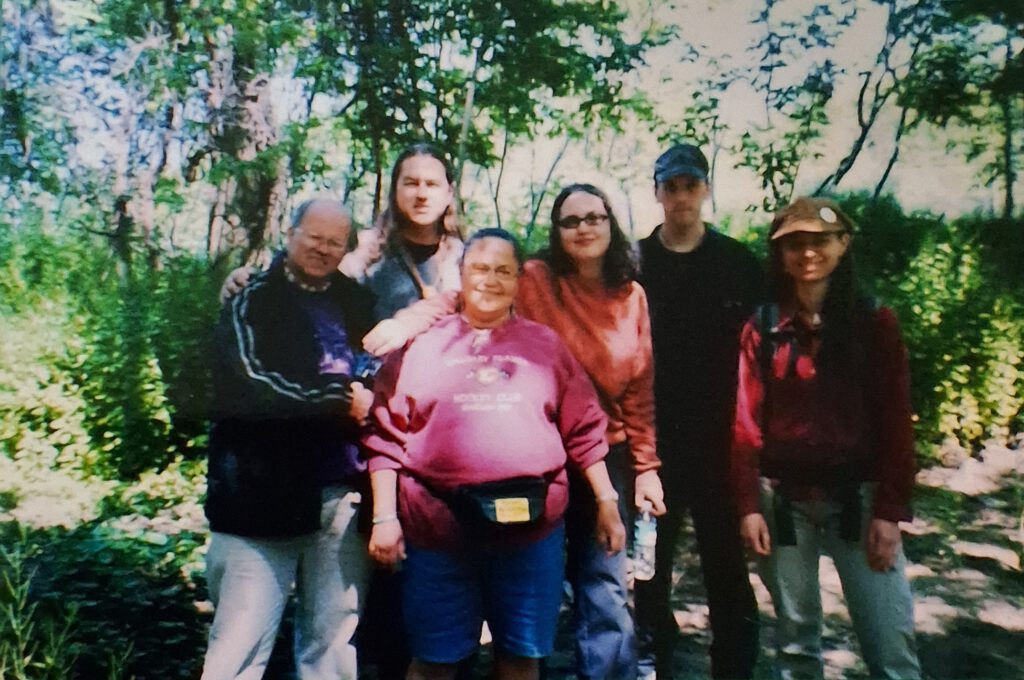
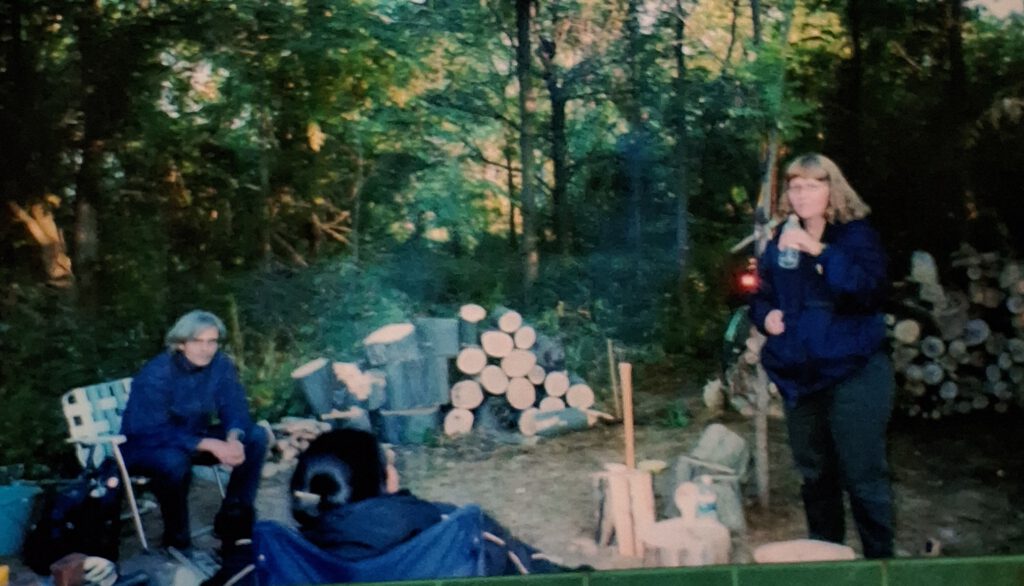
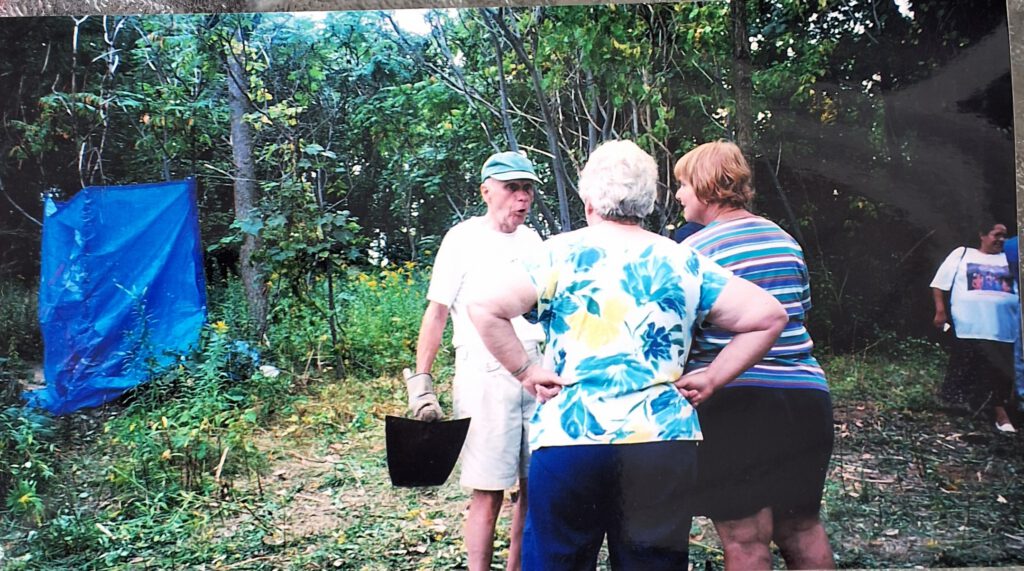
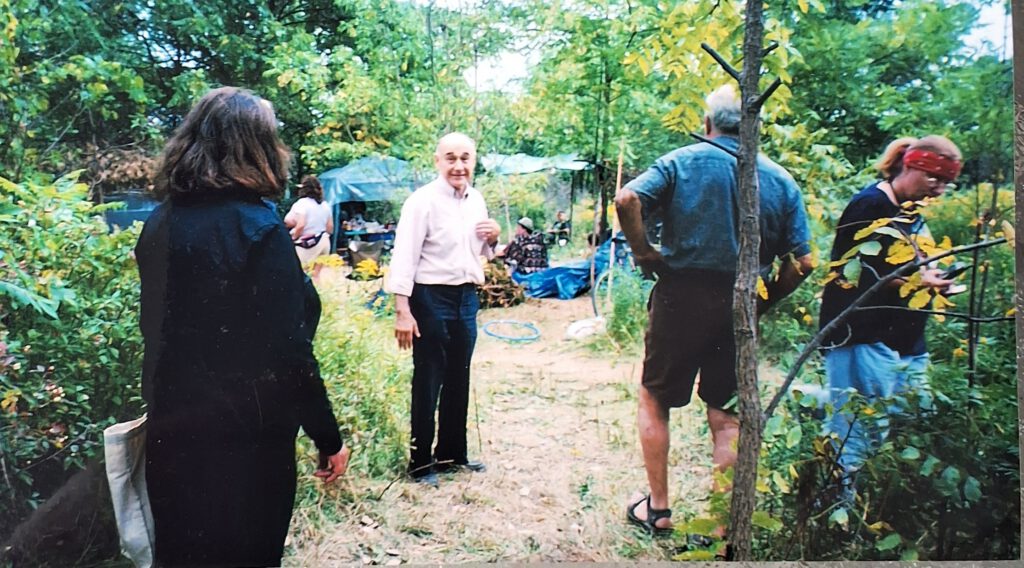
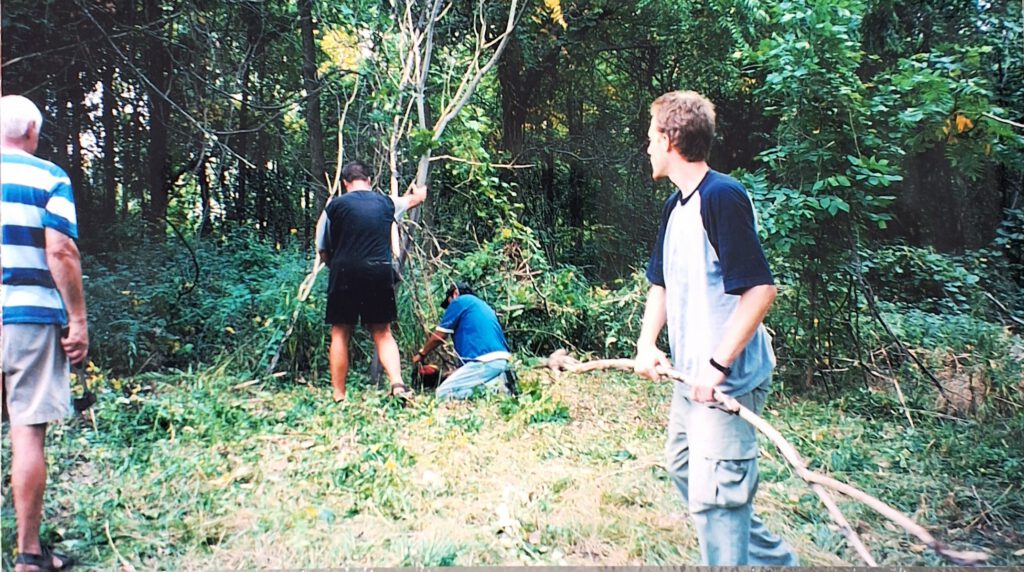
I met many beautiful people in the Valley, and I gave thanks to the Creator for keeping me safe in a place where you could never be certain who might be against you. There were, without a doubt, a few individuals I made a conscious effort to avoid.


0 Comments